When to DIY a Clog vs. When to Call a Plumber
By Fagundes Plumbing Heating AC, Tyngsborough, MA
Every homeowner deals with a clogged drain eventually. The question isn't whether it'll happen — it's knowing what to do when it does. After 30 years in the trades and 23 years running a plumbing business here in Greater Lowell and Southern New Hampshire, I've seen every type of clog imaginable. Some are genuinely simple fixes. Others are early warnings of something much more serious hiding in your pipes.
This guide is designed to help you tell the difference — so you can make the right call, whether that means grabbing a plunger or picking up the phone.
Understanding What Kind of Clog You're Dealing With
Not all clogs are created equal. The location, the symptoms, and the history of the drain all tell a story. Before doing anything, it helps to ask yourself a few basic questions:
- Is it one drain or multiple drains?
- Did it come on suddenly or gradually?
- Has this drain had problems before?
- Is there any odor, gurgling, or water backing up elsewhere?
Your answers to these questions will go a long way toward telling you what you're dealing with — and whether it's something you can safely handle yourself.
When DIY Is a Reasonable Option
There are situations where a motivated homeowner can absolutely handle a clog without professional help. Here's when that's typically true.
Single Drain, Slow But Not Stopped
A single sink or tub that's draining slowly — but still draining — is usually a localized blockage close to the surface. Hair, soap scum, and toothpaste buildup are the most common culprits in bathroom drains. In the kitchen, grease and food debris near the strainer are typical offenders.
For these situations, a few approaches work well:
Drain snake or hand auger — A basic drain snake (available at any hardware store for under $30) can reach surface-level blockages in sinks, tubs, and showers. Insert it into the drain, rotate it to catch the clog, and pull it out. It's not glamorous, but it works on the right kind of clog.
Removing and cleaning the stopper — Bathroom sink and tub stoppers collect an surprising amount of debris underneath them. Pulling them out and cleaning them thoroughly often restores normal drain flow without any tools at all.
Baking soda and hot water — For mild grease buildup near a kitchen drain, a combination of baking soda, white vinegar, and boiling water can help break up soft deposits. This is maintenance more than it is a fix, but for minor situations it can be effective.
One-Time, Known Cause
If you know exactly what caused the clog — a child's toy flushed, a clump of hair, something accidentally dropped — and it happened recently, a plunger is often all you need. Standard cup plungers work well on sinks; a flange plunger is more effective for toilets.
What to Avoid
Chemical drain cleaners are widely marketed as easy solutions, but they come with significant downsides. Products like Drano and Liquid-Plumr are caustic — they can damage older pipes, corrode fittings over time, and often just push the clog further down the line rather than clearing it. In homes with older plumbing (very common across the Greater Lowell area), repeated use of chemical cleaners can accelerate pipe deterioration. If a simple mechanical approach doesn't work, chemicals are not the next step — a plumber is.
When to Call a Licensed Plumber
Knowing when to stop DIYing and call a professional is just as important as knowing when to try it yourself. These are the situations that consistently require professional attention.
Multiple Drains Are Slow or Backed Up Simultaneously
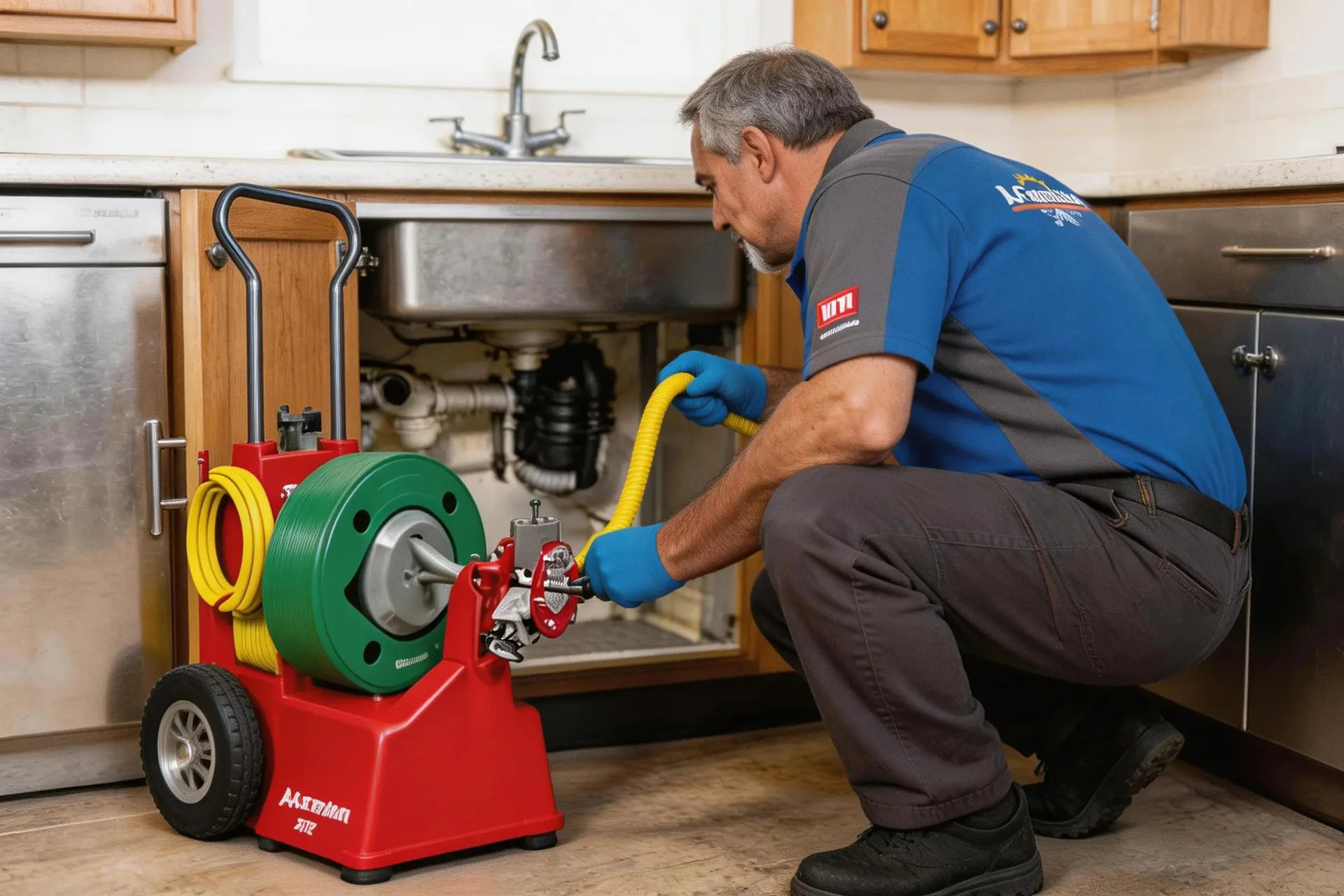
This is one of the most important warning signs a homeowner can recognize. If your kitchen sink, bathroom sink, and toilet are all sluggish or backing up at the same time, the problem is almost certainly in your main sewer line — not in any individual drain. No amount of plunging or snaking at the fixture level will resolve a main line blockage. It requires professional camera inspection and clearing equipment to diagnose and fix properly.
Gurgling Sounds After Water Use
Gurgling noises coming from a drain or toilet — especially after running the washing machine, flushing a toilet, or draining a tub — are a sign of a venting or main line issue. The gurgling is caused by air being displaced in a way it shouldn't be. Left unaddressed, venting problems can lead to sewer gas entering the home or full drain backups.
The Clog Keeps Returning
A drain that clogs repeatedly — even after being cleared — is telling you that the underlying cause hasn't been addressed. Recurring clogs in the same location are often caused by partial blockages deep in the line, buildup that mechanical snaking can't fully remove, pipe damage, or in older neighborhoods, tree root intrusion. Hydro-jetting (a high-pressure water cleaning of the pipe interior) is often the most effective long-term solution for stubborn recurring clogs.
Sewage Odor Inside the Home
A persistent sewer smell inside the house — often described as a rotten egg odor — is not something to ignore. It can indicate a dry trap, a cracked vent pipe, or a more serious sewer line issue. Beyond being unpleasant, sewer gas contains methane and hydrogen sulfide, which can be hazardous at high concentrations. This warrants a professional evaluation.
Water Backing Up Into Fixtures
If flushing a toilet causes water to rise in a nearby tub, or running the kitchen sink causes a floor drain to back up, that's a main line issue requiring immediate attention. Continuing to use water in the home under these conditions can cause sewage to back up into living spaces — a much more serious and costly problem to remediate.
You're Unsure What's Causing It
There's no shame in not knowing. Plumbing systems are complex, and misdiagnosing a drain problem can lead to wasted money on the wrong fix — or make a manageable issue significantly worse. When in doubt, a professional assessment is the most cost-effective path forward.
What Does Professional Drain Cleaning Cost?
One of the most common questions homeowners have — and one that deserves a straight answer. Pricing always depends on what's actually going on, but here are realistic ranges based on work we do every day across Greater Lowell and Southern NH:
| Service | Typical Range |
|---|---|
| Standard drain cleaning | $278 – $417 |
| P-trap replacement & clog clearing | $460 – $560 |
| Drain clearing with strainer replacement | $435 – $650 |
These reflect actual job costs — not teaser rates. Factors like pipe accessibility, the severity of the blockage, and whether any fixture components need replacement can affect the final number. Any reputable plumber should give you upfront pricing after a proper assessment, before work begins.
For a full breakdown of common plumbing and HVAC service costs, visit our Pricing Guide at AFPHpro.com/pricing-guide.
A Note on Older New England Homes
Homes throughout the Greater Lowell area — Tyngsborough, Chelmsford, Dracut, Billerica, Westford, and into Southern NH — often have plumbing systems that are decades old. Cast iron, galvanized steel, and even some clay sewer lines are still in use in many homes built before the 1980s. These materials are more susceptible to root intrusion, corrosion, and buildup than modern PVC systems. If your home is older and you're experiencing recurring drain problems, it's worth having a camera inspection done to understand the actual condition of your pipes — not just the symptoms at the surface.
The Bottom Line
Most drain problems fall into one of two categories: straightforward surface clogs that a homeowner can tackle with the right tools, and deeper systemic issues that require professional diagnosis and equipment. The key is recognizing which one you're dealing with before spending time and money on the wrong approach.
When it's a single, slow drain with an obvious cause — try it yourself. When multiple drains are involved, the clog keeps coming back, or you're experiencing any of the warning signs above — that's when calling a licensed plumber is the smarter, and ultimately less expensive, move.
Fagundes Plumbing Heating AC has been serving homeowners across Tyngsborough, Lowell, Chelmsford, Dracut, Tewksbury, Billerica, Westford, Nashua, and surrounding communities in Massachusetts and New Hampshire since 2003. If you have a drain issue you'd like a professional opinion on, we're reachable at (978) 350-5522 in MA or (603) 605-1919 in NH, or at AFPHpro.com.

.2102171106550.png)
.2005051115550.jpg)
.2509220809054.jpg)