You turned on your air conditioner expecting cool relief, but got a blast of warm air instead. Before you panic, know that this is one of the most common AC complaints we hear at Fagundes Plumbing Heating AC, and in most cases, it has a fixable cause.
Some of these you can check yourself in minutes. Others need a licensed technician. Here's how to tell the difference.
Common Reasons Your AC Is Blowing Warm Air
1. Thermostat Set to "Fan" Instead of "Cool"
If the thermostat is set to "Fan" mode, the system circulates air without activating the cooling cycle. Before calling anyone, check your settings. Make sure it's set to "Cool" and the target temperature is below the current room temperature.
2. Dirty or Clogged Air Filter
A clogged filter restricts airflow, causing the evaporator coil to freeze over or overheat. Check your filter and replace it if it's gray and matted. Most homes should swap filters every 1–3 months, more often if you have pets.
3. Low Refrigerant (Freon Leak)
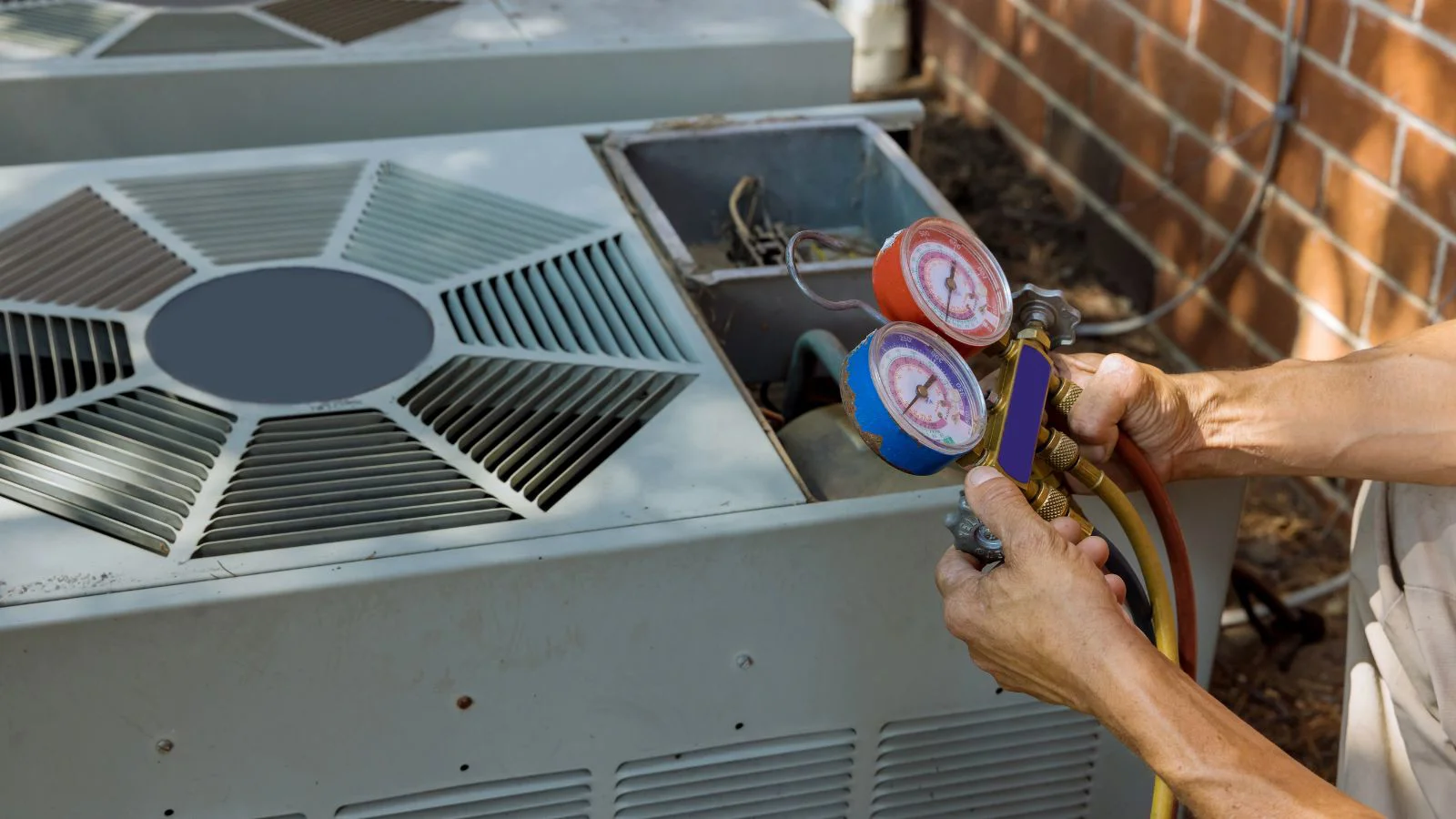
Refrigerant removes heat from your home's air. Without enough of it, your AC can run all day and never cool. Low refrigerant almost always means a leak, and this isn't a DIY fix. If you hear hissing or bubbling near the unit, call a technician.
4. Frozen Evaporator Coil
When the evaporator coil ices over, it can't absorb heat properly, pushing warm air through your vents. If you suspect this, turn the system off and let it thaw for a few hours. If it keeps happening, the underlying cause needs professional attention.
5. Tripped Circuit Breaker on the Outdoor Unit
If the outdoor unit's breaker trips, the indoor fan still runs but without cooling. Check your electrical panel and reset the breaker once. If it trips again, don't keep resetting it. Call a professional.
6. Failing Compressor
The compressor powers the entire cooling cycle. When it starts to fail, your system may run constantly without producing cold air. This is a serious repair, and depending on the age of your system, replacement may be the smarter financial decision.
When Should You Call a Technician?
Some AC issues are worth a quick self-check before picking up the phone. Others need professional attention right away. Here's when to call:
Your filter is clean and the thermostat is set correctly, but the problem persists
You hear hissing or bubbling sounds near the indoor or outdoor unit (refrigerant leak)
The outdoor unit isn't running at all
The system cycles on and off repeatedly without ever cooling the space down
A circuit breaker trips more than once after being reset
When in doubt, it's better to have someone take a look. Ignoring a refrigerant leak or a failing compressor only leads to bigger and more expensive problems down the road.
Frequently Asked Questions
Why is my AC running but not cooling the house?
- The most common reasons are a dirty air filter, low refrigerant, a frozen evaporator coil, or a problem with the outdoor condenser unit. Start by checking your filter and thermostat settings. If those are fine, it's time to call a technician.
Can I fix my AC blowing warm air myself?
- Some causes, like a wrong thermostat setting or a dirty filter, are easy DIY fixes. Others, like refrigerant leaks or compressor issues, require a licensed HVAC technician. Attempting refrigerant work without certification is illegal and can be dangerous.
How do I fix my AC blowing warm air?
- Check the thermostat first (make sure it's set to "Cool," not "Fan"). Then check your air filter. If both are fine and the problem continues, check whether the outdoor unit is running. If it's not, check the circuit breaker. Beyond that, call a professional.
Get Your AC Cooling Again
“We know a broken AC in the middle of summer can't wait. That's why our team shows up fast, diagnoses the problem, and gets your home comfortable again as quickly as possible,” says Alvaro Fagundes
📞 Call us today at (978) 350-5522 or schedule a repair online.
Related reading:
Is Your Furnace a Carbon Monoxide Risk? A Homeowner’s Guide to HVAC Safety.
References:
U.S. Department of Energy. (2026, April 16). Air conditioner maintenance. Energy Saver. https://www.energy.gov/energysaver/air-conditioner-maintenance
U.S. Environmental Protection Agency. (2026, February 2). Stationary refrigeration and air conditioning. EPA. https://www.epa.gov/section608

.png.2607170859416.webp)